Writing unforgettable heroes and villains isn’t just about giving them witty dialogue or a killer wardrobe (though those help). The key lies in their desires—or, more specifically, their obsessions. Let’s dive into what makes these characters tick, clash, and linger in your audience’s minds long after the credits roll.
All Great Characters Want Something (Badly)
If your character doesn’t want something, they’re not a character—they’re a prop. Whether it’s Frodo’s determination to destroy the One Ring or Miranda Priestly’s quest for sartorial perfection, every compelling character is driven by a goal.
Heroes and Villains Are the Most Driven of All
Among your cast, the hero and villain are typically the ones with the strongest drive. Why? Because they’re the ones steering the story. The hero’s journey is about overcoming obstacles to achieve their goal, while the villain’s arc (or descent) is about stopping them or pursuing their own twisted version of success.
Think of it this way: if your hero and villain swapped diaries, they’d probably read close to the same, tonally. The difference is in what these characters are willing to do to achieve their dreams… for the most part. Let’s dive into what makes them similar and different so you can understand how to use them while writing your story.
Writing a Good Villain: Obsession Is Their Middle Name
Villains don’t just want things—they need them. And this need drives their every action, often at the expense of humanity, empathy, or even basic logic. Obsession is their defining trait, and it’s what makes them terrifyingly effective and endlessly fascinating.

Try Ursula from The Little Mermaid for example. That chick is committed to gaining Neptune’s power. I mean, who wouldn’t be, right? But she can’t see the ways to do so without terrorizing his teenage daughter. She develops an elaborate plan to help the girl fall in love with a guy who’s an entirely other species, then forces her to sign a contract (underwater, by the way) that allows her to rip Ariel’s vocal cords out, chop off her tail, and transplant legs onto her. That involves a lot of surgical magic when she could have easily just committed a heist.
The Villain is the Hero of Their Own Story
Here’s the thing: No villain sees themselves as a villain. Thanos didn’t wake up thinking, “Time to do some evil today.” To him, snapping half the universe out of existence was a noble act of balance and mercy (and, yes, sometimes it may also seem like that to us). Writing a good villain means giving them motivations that make sense—even if their methods don’t.
Another great example but from another perspective is the cordyceps from The Last of Us. That fungus is biologically designed with a need to take over the world purely for its own survival. Not its fault, but it is seriously a bummer to be around as a result. It doesn’t care who or what contract it as a host, it’s going to kill them and turn them into creepy, mindless monster slaves.
Why Obsession Dehumanizes Villains
As mentioned, a great villain’s obsession blinds them to other perspectives. They’re so laser-focused on their goal that they can’t (or won’t) consider the collateral damage. This tunnel vision not only alienates them from the other characters but also from the audience, turning them into larger-than-life figures we love to hate. Poetically, this obsession, tends to be a major cause for their downfall, but to understand why, we must first understand heroes’ relationship with obsession.
Writing a Good Hero: The Journey from Obsession to Growth
Heroes can be just as obsessed as villains. In fact, they often start their journey consumed by a singular goal. The difference? Heroes learn to grow, evolve, and see beyond their obsession. This shift is what makes them relatable, human, and ultimately, heroic.
When Obsession Fuels the Hero’s Journey
In the beginning, your hero’s obsession might mirror the villain’s. Think Katniss Everdeen’s determination to protect her family or Tony Stark’s obsession with his legacy. This single-mindedness drives them into action and sets the story in motion.
Let’s look at Lightning McQueen from Cars. Flash wants to prove he is the best racer ever. His drive (pun intended) lands him trapped in a small town he feels he’s better than and is forced to do community service after he damages a local road. It is said that one way to tell a story is to put an exceptional character in an otherwise blasé setting. Thanks to Lightning’s obsession, we have that.
The Turning Point: A New Perspective
At some point, a good hero realizes there’s more to life than their initial goal. Maybe they fall in love, uncover a devastating truth, or experience a loss that changes their perspective. This moment of clarity is crucial. It’s what separates the hero from the villain and makes their journey feel earned. When this happens exactly is up to the writer, but I would argue it happens most effectively somewhere between the midpoint and the climax.
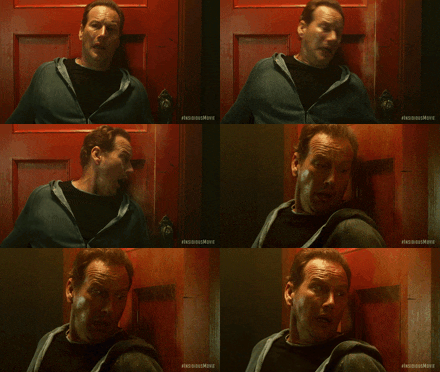
Look at Josh Lambert from Insidious. He only begins to gain leeway toward achieving his goal of protecting himself and his son from their horrifying visions and experiences when he is taught to face them head-on. He wouldn’t have been able to become the hero he needed to be until his revelation and decision to face his fears were realized.
Heroes vs. Villains: The Battle of Obsessions
Ultimately, the clash between your hero and villain is a clash of obsessions. One is willing to sacrifice their humanity to achieve their goal, while the other learns to let go and grow. This contrast not only drives your story but also keeps your audience invested and gives them a side to cheer on.
When the hero sees new paths and opportunities, they become more three-dimensional, gain allies and strength, and eventually become capable of stopping the villain from achieving the object of their own obsession.
The villain does not sense those new opportunities, doesn’t understand why anyone would take their eye off the ball, and fails to grow stronger without the sacrifices of others. This creates a character who is productive, but incapable of success. If they reach success, that probably means your story isn’t over.
Tips for Writing Obsessive Characters
- Give them a clear goal. Obsession doesn’t exist in a vacuum. Your characters need a tangible reason for their actions. With this in mind, a villain may behave as though they are in a vacuum. This amplifies that obsession even more to the audience.
- Show their humanity (or lack thereof). Villains can have moments of vulnerability—but don’t overdo it. If you do, then the audience may get confused as to who they should actually root for. While this is a fun thought experiment, it typically leads to conflicting feelings about the villain or hero and potentially deflates the story a bit. A token moment of vulnerability for the bad guy is intriguing and keeps the audience engaged.
- Let their obsession evolve. For heroes, this means growth. For villains, it means descent. Heroes see other goals or new paths to accomplish something even greater. Villains only see a singular destination and any changes create diminishing returns for themselves or even worse outcomes for everyone else.
- Keep the stakes high. The bigger the goal, the more compelling the obsession. This is true on both ends.
One Caveat
Sometimes the villain does win. It sucks but it happens. If that truly is the end of your story, then that means the villain achieved whatever they were obsessed with and the hero failed their mission because they hadn’t grown enough to learn how to stop them.
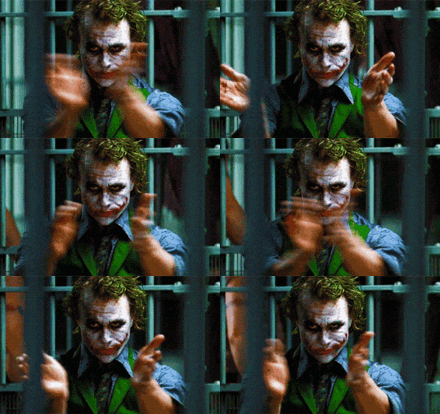
As a screenwriter, there’s nothing wrong with this decision—it’s your story, you can end it how you want. That said, this decision turns your story into a tragedy. Should you want to write a tragedy, please refer back to item four in the list above. A tragedy needs to have the highest stakes if you want the audience to value the story.
What If the Hero Fights Himself?
Having the same character embody both the hero and villain is a very common storytelling device, but fear not, obsession still plays a part on both sides!
In this situation, the hero ends up being the side of a character that the audience sees more of. The villain is a part of them that discourages them or actively holds them back from achieving their goal. It’s almost as if that part of them is obsessed with getting in the way (wink, wink).
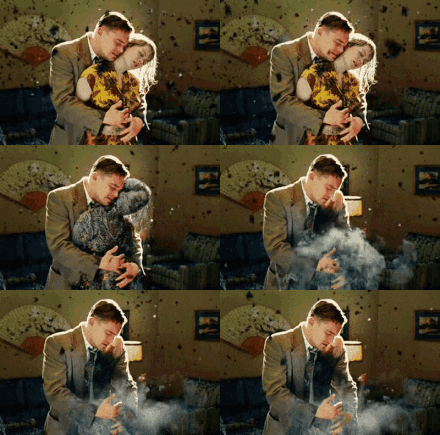
Over the course of the story, the heroic side of them becomes more vibrant as the character learns more ways to overcome their obsessive, problematic side. As a result, the villainous side of them begins to look smaller and smaller, and thus weaker. Think of it like a piechart with two sections. One section grows larger and the other grows smaller. These illustrate your hero’s growth and villain’s descent, respectively.
Work with Us to Create Three-Dimensional Characters
Struggling to write characters that leap off the page or screen is incredibly common. You’re not alone. Our writers know how to craft heroes and villains with depth, nuance, and just the right amount of obsession. Whether you’re building a screenplay or only brainstorming, we’re here to help bring your vision to life.
Let’s create unforgettable characters. Contact us today to get started!
 Scott Duvall