If you’re reading this, you’ve probably stared at your script and wondered, “Why do all my characters sound like their souls are made of cardboard?” You’re not alone. Dialogue is one of the hardest aspects of screenwriting to get right. The good news? You’re about to learn how to make your character conversations as believable as your audience’s skepticism of sequels.
Why Writing Dialogue is Harder Than It Looks
Dialogue is deceptively simple. It’s just people talking, right? Wrong. Good dialogue is when people talk with intent, purpose, and value. Bad dialogue happens when people talk for no reason other than to fill the void of silence—and trust me, your audience can tell the difference.

The Three Pillars of Great Dialogue
- Intent: Every line should reveal something about your character or their goal.
- Purpose: Each piece of dialogue must move the story forward.
- Value: Even if its significance isn’t immediately clear, the line should matter eventually.
A good way to think about this is Intent + Purpose = Value. Nail the first two and the third will fall in line. If your dialogue doesn’t check all three boxes, it belongs in the trash.
Show, Don’t Tell: Why Dialogue Shouldn’t Do All the Work
Here’s a secret: The best dialogue isn’t dialogue at all. If you can express something through body language, silence, or an expressive look, do that instead. Your audience isn’t stupid. They’ll get it. They’ll even appreciate it.
Body Language Speaks Louder Than Words
Your characters’ actions and expressions can convey volumes without a single syllable. For example:
- A character biting their lip nervously says more than, “I’m anxious about this situation.”
- A glance at a wristwatch communicates impatience faster than a monologue about how “time is of the essence.”
What’s more, your actors will appreciate the script more deeply when you allow them to express themselves non-verbally. An acting professor once told me that the value of a glance away in response to a question will reveal so much more about the true answer than any words ever could. I think about this constantly when writing my own scripts.

Silence Is Golden (When Used Correctly)
Don’t underestimate the power of a well-placed pause. A moment of silence can create tension, imply unspoken thoughts, or allow the audience to fill in the blanks—which is way more engaging than spoon-feeding them every detail. This leads to my next point…
Never Fully Express Your Characters’ Thoughts
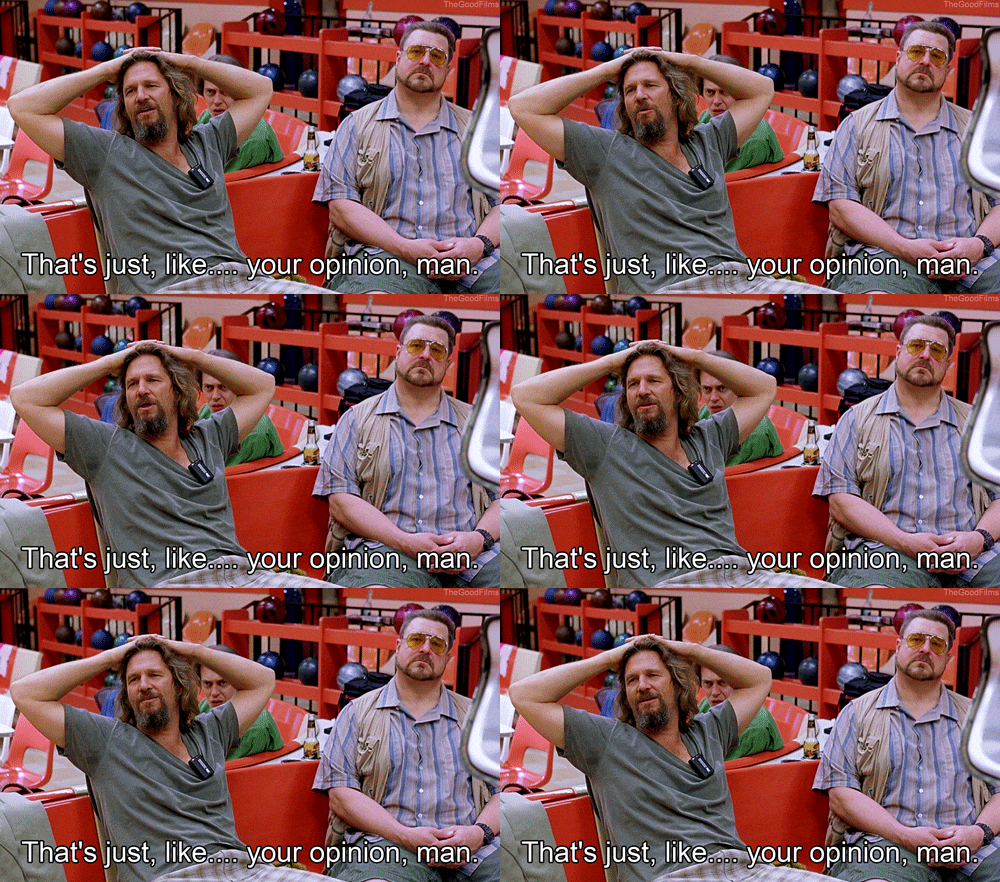
In real life, people rarely say exactly what they mean. Your characters shouldn’t either. Realistic dialogue thrives on subtext—the unspoken meaning behind the words.
Examples of Subtext in Dialogue
- What they say: “I’m fine.”
- What they mean: “I’m furious, but I’m not ready to talk about it.”
- What they say: “Do you really think that’s a good idea?”
- What they mean: “That’s the dumbest idea I’ve ever heard.”
Subtext makes conversations feel layered and real. It’s what keeps your audience engaged, wondering what your characters are truly thinking. It’s what makes dialogue a “page-turner.”
Why Dumbing Down Dialogue Hurts Storytelling
- It infantilizes the audience. People want to be challenged, not spoon-fed. This was one of the first lessons I learned the hard way in a creative writing class during undergrad. I over-explained something that I didn’t think my subtext was strong enough for, and EVERY SINGLE CLASSMATE ripped me apart for it. Even the professor returned my short story with his feedback face down.
- It strips characters of depth. When dialogue exists solely to summarize the plot, your characters lose their unique voices. Subtext, euphemisms, intonation, and body language are thrown out the window. “Hey, why did you come into the kitchen when you’re supposed to be at work,” comes off much worse than squinted eyes and crossed arms.
- It prioritizes quantity over quality. This approach may work for binge-worthy background noise, but it’s not how you create memorable stories. It’s simply a matter of whether you’re writing to keep focus or you’re writing to check off a threshold of minutes viewed for performance tracking.
So, if you’re tempted to simplify your dialogue for mass appeal, ask yourself: Do you want to write something that plays on the viewer’s “second screen?”
How to Write Dialogue With Intent, Purpose, and Value
Now that we’ve covered what not to do, let’s talk about how to make your dialogue shine.
1. Focus on Characters’ Goals
Before your characters open their mouths, ask yourself:
- What does this character want in this moment?
- How does this line help them achieve it?
If the line doesn’t serve their intent, it’s dead weight. Cut it. Your audience, cast, and crew will all thank you.
2. Keep It Short and Sweet
Real conversations are messy, but good dialogue is streamlined. Every word should count. If your characters are delivering monologues, consider breaking them up with interruptions, pauses, or actions.
If you want to keep a monologue, be sure to consider other characters’ reactions and whether long-winded speeches fit the character assigned the lines.

3. Read It Out Loud
Nothing reveals clunky dialogue faster than hearing it spoken. If it doesn’t sound natural, rewrite it until it does. While you’re at it, try reading the line in different tones and emotions. You’ll be surprised what you reveal to yourself.
4. Let the Audience Read Between the Lines
Your audience is smarter than you think. Trust them to pick up on context clues and subtext. Don’t spell everything out.
This isn’t a license to get as weird and complex as possible. It’s about realism.
Work with Us to Develop Strong, Realistic Interactions
Struggling to write dialogue that doesn’t feel like filler? Our team of experienced writers knows how to craft conversations that are purposeful, engaging, and authentic. From subtext-rich exchanges to meaningful silences, we’ll help you bring your characters to life in ways that captivate your audience.
Let’s turn your screenplay into a masterclass in dialogue. Contact us today to get started!
 Scott Duvall